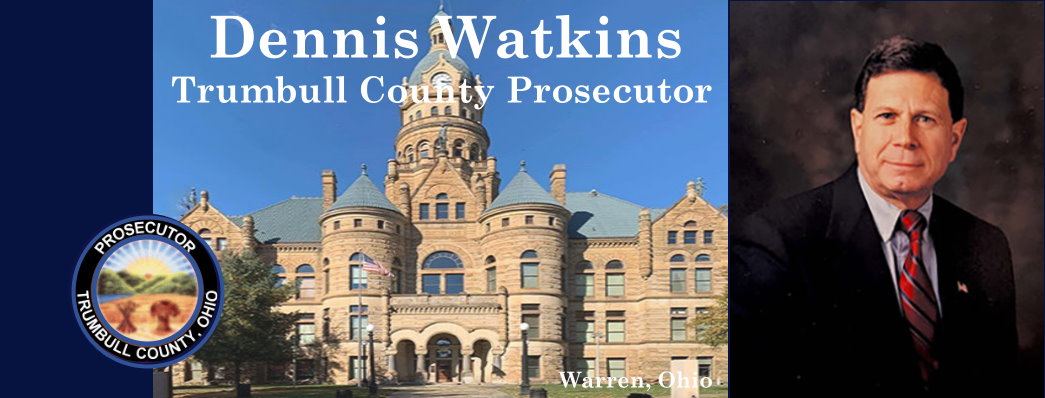





The Ohio 11th District Court of Appeals, in two rulings this week, refused to reconsider Danny Lee Hill’s bid to file a second postconviction relief petition challenging his death sentence amid claims of intellectual disability.
In separate decisions written by 11th District Judge John J. Eklund, the court struck down Hill’s “Motion to Certify a Conflict” and his “Application for 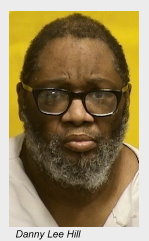 Reconsideration and En Banc Consideration” of that court’s most recent decision on Aug. 17, 2026, again affirming that Hill is not intellectually disabled.
Trumbull County Prosecuting Attorney Dennis Watkins and Assistant Prosecuting Attorney and Appellate Chief Charles Morrow, who along with Special Assistant Stephen Maher of the Ohio Attorney General’s Office, worked on the appeals for the state, praised the two unanimous decisions denying relief to Hill.
Watkins appreciated the judicial recognition that the Federal Public Defender’s efforts advancing false, exaggerated, or untimely claims, or as Judge Eklund noted; “[c]ontinuing to articulate a theoretical exception that never actually applies in practice, offers false hope to defendants, distorts the law, misleads judges and wastes the resources of defense counsel, prosecutors and the courts.”
The Ohio Supreme Court on April 23, 2026, remanded the case, which was argued by the former Ohio Chief Deputy Solicitor General, and now Federal District Court Judge Michael Hendershot, back to the 11th District court. In August, the unanimous 11th District court, led by Judge Eklund and joined by Judges Matt Lynch and Robert J. Patton affirmed visiting Judge Patricia Cosgrove’s 2023 decision denying Hill’s petition for relief, which was raised by the Federal Public Defender’s Office, because it was “untimely and successive.” The ruling stated there were no new facts that Hill was intellectually disabled, only a new opinion, based upon the old facts.
Judge Ecklund, who again was joined by Judges Lynch and Patton, also stated: “An application for reconsideration is not designed for use in instances where a party simply disagrees with the conclusions reached and the logic used by an appellate court.”
In her 2023 decision, Judge Cosgrove found that the trial evidence overwhelmingly supported Hill’s conviction for aggravated murder with the death penalty specification. Cosgrove also noted that the issue of intellectual disability “has been examined and re-examined… in several postconviction petitions and motions for a new trial. The evidence of Hill’s behavior before the age of 18 is not new evidence,” Cosgrove wrote in her 2023 decision.
Hill’s argument is based on the U.S. Supreme Court 2002 decision in the case of Atkins vs. Virginia that determined the Eighth Amendment’s bar against cruel and unusual punishment prohibits the imposition of the death penalty for “mentally retarded” persons.
Watkins further believes that these court decisions through the years at both state and federal level hold that Hill was fairly tried, convicted and sentenced to death for torturing, raping and murdering 12-year-old Raymond Fife in 1985. Watkins also noted that while a few judges in the minority disagree, there has not been any court finding Hill, who had malingered on various IQ tests, is intellectually disabled.
Hill was convicted and sentenced to death in 1986 by a three-judge panel of aggravated arson, kidnapping, rape, felonious sexual penetration and aggravated murder with capital specifications arising out of the September 1985 torture, rape, and murder of 12-year-old Raymond Fife of Warren. Following Hill’s horrifying crimes, Hill gathered his wits, and on his own, went to the Warren Police Department seeking a reward, giving a statement, blaming others and misleading officers.
The Ohio Supreme Court first rejected Hill’s original appeal of his conviction and death sentence back in 1992. Later in 2003, after Hill filed his original Atkins petition, Judge Thomas Curran presided over the longest Atkins hearing in Ohio relating to Hill’s alleged intellectual disability. After an expert for the state and another expert for the court had determined that Hill was not intellectually disabled, Judge Curran rejected Hill’s claim, and Ohio’s high court in 2009 declined to accept Hill’s appeal. It is that decisions that most recently has been ultimately upheld.
An attempt by Hill to mount an Atkins claim in the U.S. Sixth Circuit Court was struck down in 2022, by a 9-7 vote after an en banc hearing argued by then Ohio Solicitor General and current 6th Circuit Court of Appeals Judge, Benjamin Flowers. And the U.S. Supreme Court followed by declining to review that 6th Circuit decision.
Those decisions led to Hill’s attorneys filing a motion in the local court seeking a second bid for relief under Civil Rule 60(B), which Ohio’s high court struck down in its April 2026 ruling remanding the case to the 11th District Court.
For more information, contact Guy M. Vogrin, investigator/public information officer for the Trumbull County Prosecutor’s Office at 330-675-2485.
Jenna Maze, coordinator of the Victim/Witness Division of the Trumbull County Prosecutor’s Office, has learned that convicted child rapist Paul Czoka has died while incarcerated. He was 78 years old. As customary, the victims of Czoka’s crimes were informed of his death.
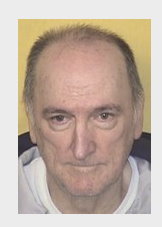 The cause of Czoka’s death was not disclosed. JoEllen Smith, chief of communications for the Ohio Department of Rehabilitation and Correction, confirmed that Czoka passed away at 3:17 p.m. on Sept. 22, 2026, at the Franklin Medical Center.
On Feb. 11, 2026, the full state parole board, by a vote of 5-3-1, refused parole for Czoka who was serving a 14- to 55-year prison term. In that decision, the full board had reversed itself as Trumbull County Prosecutor Dennis Watkins, after learning the board had originally decided to release Czoka, had requested the parole board hold a full board hearing.
Czoka had been incarcerated at Pickaway Correctional Institution.
In February, Watkins and two of Czoka’s victims traveled to Columbus to appeal to the full board to keep Czoka in prison, which the parole board did, deciding to keep Czoka behind bars until at least 2031. Czoka was convicted in 1992 of two counts of rape and two counts of pandering obscenity involving minors.
Prosecutor Watkins reacted to the news of Czoka’s death.
“Though we don’t celebrate the death of any individual, the facts of this case showed that this man grew up with all the advantages of a good family but at some point in his life, made a choice to rape and photograph young children. These young victims have been affected by Czoka’s actions for the rest of their lives. Any release of this man for even a short term would have been traumatic for his victims, and they have a right for their safety to be considered.”
Czoka’s victims were as young as age 5 at the time of the offenses. The obscenity charge involved Czoka taking pictures and videos of himself and the young victims during these heinous acts. During the testimony before the parole board earlier this year, one of the victims stated (Czoka’s) victims “were all innocent happy children before this sexual deviant came into our lives.” She said she still fears the man and is concerned about him seeking revenge.
The victim would tell the board she was raped at her mother’s house, at parks, at a relative’s home, and many times in the car. She said that Paul Czoka threatened her and he said: ‘I will kill your sister, mom and dad if you told anybody’ about what he was doing. (See attached release for more information)
In conclusion, Watkins reflected on Czoka’s destiny.
“In the end, the message about Czoka’s life is if you sexually abuse young children, don’t ever expect to be released from prison.”
In his reaction to the results of the February parole hearing, Watkins had concluded the only way to guarantee that there would be no more child victims is to let Czoka die in prison.
In letters to the parole board opposing freedom for child sex offenders like Czoka, Watkins had noted the high incidence of re-offending by these predators, with some of those committing child sex offense while in their 80s. Watkins had even documented the case of a New York pedophile who re-offended when he was in his 90s.
There is a movement in this country, with states like Florida, Idaho, Arkansas and Oklahoma already enacting legislation, that would allow the death penalty for the predatory criminal sexual assault of young children, like the victims of Paul Czoka.
For more information, contact Guy M. Vogrin, investigator/public information officer for the Trumbull County Prosecutor’s Office at 330-675-2485.
Prosecutor Dennis Watkins and Gabe Wildman, head of the Child Assault Unit, wrote the Board: ‘Felicia Beemer is a corrections nightmare and monster child sex offender who needs incapacitation by incarceration until death… she has amassed a staggering 85 documented infractions including sexually assaulting another inmate.’ \
Jenna Maze, coordinator for the Trumbull County Prosecutor’s Victim/Witness Division, has been informed by the Ohio Department of Rehabilitation and Corrections that convicted sex predator Felicia Banks Beemer has been denied par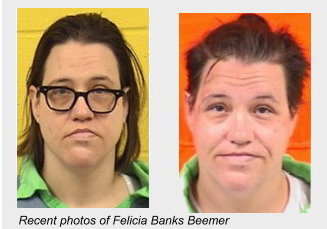 ole and must remain in prison for at least 10 more years.
According to the ODRC, Beemer, 36, who is incarcerated in the Ohio Reformatory for Women in Marysville will face her next parole hearing in June 2036.
Beemer is serving a 15-years-to-life prison sentence on convictions of two counts rape, three counts pandering sexual material with minor, and two counts pandering obscenity involving minors. She was sentenced on Nov. 2, 2012, by former Trumbull County Judge W. Wyatt McKay.
Cell phone videos showed both Felicia and her husband raping an eight-month-old female child during a visit at Trumbull County Children Services in April 2011. The acts were captured on Felicia Beemer’s cellphone, which also contained more than 500 images of child pornography. Also, both Felicia and her husband were convicted of raping an 18-month-old male relative while the couple was babysitting him. That offense was also captured on Felicia Beemer’s cellphone, evidence showed.
At the time of her conviction in 2012, former Assistant Prosecutor Diane Barber, then head of the office’s Child Assault Unit, stated about Beemer’s offenses: “They are the worst form of the offense ... (Beemer and her husband) preyed on children — one of them under 1 year old. The other is under 2 years. Kids that age don’t have the verbal skills to discuss it. And not only that, the victims were relatives of the defendants — blood relatives of Felicia’s.”
Prosecutor Dennis Watkins said he was well pleased with the fine work of the Ohio State Parole Board in denying release to Beemer who had her parole hearing earlier in August. Watkins and the head of his Child Assault Division, Assistant Prosecutor Gabriel Wildman, combined on a letter to the state parole board, opposing parole for Felicia Beemer. In the letter, the two attorneys talk about Beemer’s bad behavior while in prison: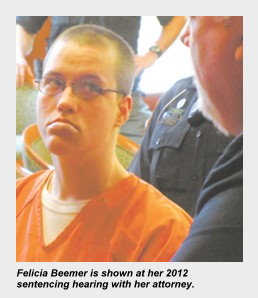
“Her prison disciplinary record for the amount of time served is the worst Prosecutor Watkins has seen since taking office in 1984. She has been incarcerated in Ohio’s prison system for approximately the past 14 years, and Inmate Beemer has amassed a staggering 85 documented disciplinary infractions. A deeper dive into these records clearly illustrates that Felicia Beemer remains a violent sexual predator, who refuses to follow even the simplest of rules. It is not difficult to imagine the havoc she would undoubtedly wreak if she were to be turned loose especially when knowing that she is clear and present danger to others in prison!” the letter stated.
Among the many in-prison infractions include Beemer sexually assaulting another inmate during a program activity in January 2025. Other violations initiated by Beemer during the last few years include her many violent assaults – including a hit-for-hire on a sleeping inmate -- diverting or “cheek” controlled medications, faking seizures to manipulate staff, extorting or trading illicit and stolen property, and threatening and/or spewing hate speech to prison staff and other inmates. A total of 14 documented acts of violence against others while in prison.
Watkins and Wildman wrote: “Felicia Beemer is a corrections nightmare and monster child sex offender who needs incapacitation by incarceration until death… The evidence unequivocally illustrates that Felicia Beember is a predator, child pornographer, pedophile, and a child rapist. She preyed on multiple children who trusted her. She preyed on an infant and toddler. She even had recorded herself having sex with a dog. She ensured that her crimes were captured on video so that her co-defendant and her could revisit, lust, and possibly revictimize these children at their leisure.”
Members of the public may submit comments about the potential parole of Felicia Beemer. Comments can be made through the ODRC website: https://drc.ohio.gov/systems-and-services/1-parole/parole-board-hearing-input
For more information, contact Guy Vogrin, investigator / public information officer, Trumbull County Prosecutor’s Office, 330-675-2485.
Once told prison guard that if released, he would shoot more cops;
After decades behind bars, Joseph increases pace of rules violations
Jenna Maze, coordinator of the Trumbull County Prosecutor’s Victim Witness Division, learned from the Ohio Department of Rehabilitation and Correction this week that 60-year-old police killer Fred Joseph Jr. has been denied parole and his next parole hearing will be scheduled in six years.
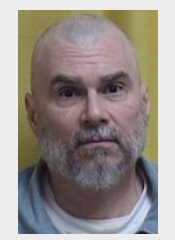 Joseph, who is serving a 30-year-to-life sentence for the December 1982 shooting death of Niles police officer John Utlak, was denied parole by the Ohio State Parole Board after a hearing in late July.
Joseph and his accomplice Randy Fellows were tried and found guilty before two different juries and Joseph was sentenced by late Common Pleas Judge David McLain in June 1983 after being prosecuted by Trumbull County Prosecutor Dennis Watkins and staff attorneys.
John Utlak and his partner Bob Ludt were investigating drug activity among the teen population of Niles. On the evening of Dec. 8, 1982, Utlak told his partner that he was going to meet some informants, Fred Joseph Jr., then age 17 and Randy Fellows, 18, in the parking lot of the Gibralter Steel Corp. in Mineral Ridge. Unknown to Officer Utlak, Joseph and Fellows had planned to kill and rob the officer and flee the state of Ohio. Upon arriving at the parking lot, Fellows remained in the car while Joseph got out to speak to Utlak. As Joseph approached the officer, he pulled out a gun and shot Utlak at close range in the right side of the head. Joseph and Fellows then robbed Utlak of $400, a watch, his service revolver, a two-way radio and shotgun. Fellows and Joseph then fled the state in Fellows’ mother’s stolen car, heading west on the interstate. The dead body of Utlak was found the next morning by plant workers. Shortly after midnight on Dec. 11, 1982, Joseph was arrested at a traffic stop in Wyoming, while Fellows was arrested later at a Cheyenne, Wyoming, motel.
In his letter opposing parole, Watkins stated Joseph does not qualify for parole because of the heinousness of his crime, his future dangerousness, and his record of not learning from past mistakes as evidenced by his poor in-prison behavioral record which included “constant spewing of hateful epithets and violence to others no matter who you are.”
The letter detailed a conversation between then prison guard, Doug Sollitto, and Fred Joseph which occurred around 1994 at Trumbull Correctional Institution in which Joseph acknowledged personally shooting officer Utlak and “when I get out, I’m going to sit across from the Niles Police Department and shoot the first five cops that come out the door”
Joseph’s prison infraction record includes a recent history of 27 incidents and 46 violations of breaking prison rules and verbally abusing correction officers. (See attached June 15, 2026, letter which details prison records including recent increase of bad behavior – 46 reported infractions in the last five years.)
Watkins said he was pleased with the parole board’s decision and happy for Joseph’s surviving family, including his sister Joanne Robbins, and his partner Bob Ludt. Joanne also appreciated the Parole Board personally calling her to inform her of their decision.
“This office views him (Joseph) as “a safety hazard,” a man who has, can and will spew out hatred and violence without a moment’s notice even while in prison,” Watkins said. “Fred Joseph does not qualify to get in the return-to-society recycling bin of inmates… he needs imprisonment until he dies. Because Joseph was 17 years old when he killed Officer Utlak, this actual killer missed a death penalty prosecution by days.”
Joseph, who is incarcerated at Toledo Correctional Institution, will have his next parole hearing in May 2032.
Members of the public may submit comments about the potential parole of Fred Joseph Jr. Comments can be made through the ODRC website: https://drc.ohio.gov/systems-and-services/1-parole/parole-board-hearing-input
For more information, contact Guy Vogrin, investigator / public information officer, Trumbull County Prosecutor’s Office, 330-675-2485.
Democrat Trumbull County prosecutor also asks both Ohio Republicans and Democrats to join other states to pass death penalty law for predatory rapists of very young children
Guilty infractions after guilty infractions in 2026, 2025 and 2024 … underscore the continuing dangerousness of this man…It is unimaginable that this man should be released from prison back to Trumbull County or anywhere else in this country or planet earth, Prosecutor Watkins says
AGE: 67(DOB 7/31/1958)
INCARCERATED: Marion Correctional Institution
SENTENCED: 18 years to life on convictions of murder, felonious assault and inciting violence. Sentenced on Nov. 10, 1994, by former Trumbull County Judge W. Wyatt McKay. Palma was convicted of the May 4, 1994, slaying of his wife Vivian Chancellor, 42.
PAROLE HEARI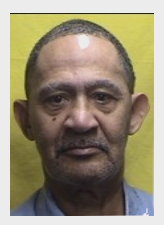 NG: August 2026 (last hearing was in 2021)
THE CRIME: On May 4, 1994, Palma called Chancellor home from her job as prison guard at Trumbull Correctional Institution, saying her grandchild was ill. Earlier that day, Palma had been drinking and told a witness he was going to kick out Chancellor, because he had read letters to her from another man who wanted Chancellor to leave Palma. The same witness had observed a shotgun sitting up against the wall and told Palma not to do anything stupid. Later that day, Warren city police received a call from Palma stating he had just killed his wife. Officers went to the home where they found Ms. Chancellor slumped over in a chair with a fatal 12-guage shotgun wound to the head.
Prosecutors noted Palma’s propensity for anger by describing an incident at the Trumbull County jail as he awaited trial. He and another cellmate were told they had to move to another cell, and Palma threw chemicals in the faces of jail officers and bruised their arms.
While in prison, Palma displayed inappropriate behavior with a newly hired female staff member. Twice in 2014, Palma was involved in a physical altercation with another inmate. Prosecutor Dennis Watkins noted that Palma’s recent prison infraction record since his last parole hearing in 2021, has not improved.
“Guilty infractions after guilty infractions in 2026, 2025 and 2024 in prison underscore the continuing dangerousness of this man,” Watkins writes in his most recent letter to the parole board. “It is unimaginable that this man should be released from prison back to Trumbull County or anywhere else in this country or planet earth.”
While sitting in an April 2026 disciplinary session with prison authorities, inmate Palma was very agitated and started getting loud in making threats toward another inmate. Palma said: “I’m doing life, I don’t care. You (expletive). Don’t let me out, I will kill that dude. I got life. Don’t leave me here, I will kill the (expletive).”
Watkins also notes that his program training and community service activity has allowed Palma to be able to train dogs, plant flowers, do gardening and know something about “crayons to computers.” Watkins states: “Nevertheless, in reviewing his bad behavior history, Palma in my opinion, cannot escape his continuing record of being a con artist/sociopath when it comes to living with real people in the real world – his temper will always get in the way.”
Former Assistant Prosecutor Diane Barber wrote the board in 2007 that “Due to the fact that Mr. Palma has shown such propensity to violence and an inability to control his actions... We strongly recommend that you keep Mr. Palma incarcerated for the entire sentence imposed by the court.”
“So, whether it is our letters of 2007, 2016, or today, the Trumbull County Prosecutor’s Office and the surviving victim’s family consistently and strongly maintain the view that inmate Palma should serve his full life sentence to ensure adequate punishment and protect the public from future crime … I don’t believe I have ever witnessed a more fearless, daring, and highly creative approach to parole release by an inmate while being disciplined in prison than Palma. He is saying to corrections officials, parole me or I will kill a fellow inmate. He says he has nothing to lose if he kills in prison since he is serving a life sentence anyways. This jerk is in prison for brutally murdering a defenseless woman – and has been rehabilitated beyond belief with programs – yet they have not been effective, which means in my mind, Ignacio Palma, after 36 years, IS NOT SUITABLE FOR RELEASE ON PAROLE AT THIS TIME OR EVER.”
Prosecutor Dennis Watkins
Members of the public may submit comments about the potential parole of Ignacio Palma. Comments can be made through the ODRC website: https://drc.ohio.gov/systems-and-services/1-parole/parole-board-hearing-input
For more information, contact Guy Vogrin, investigator / public information officer, Trumbull County Prosecutor’s Office, 330-675-2485.